Loading…
Itanium
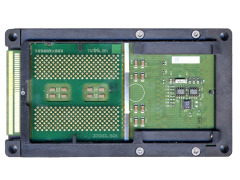
Launched in 2001The original Intel Itanium, code-named Merced and introduced in 2001, is Intel’s first implementation of the IA-64 architecture, a radical departure from x86 that uses an Explicitly Parallel Instruction Computing design in which the compiler, rather than the processor alone, is responsible for exposing instruction-level parallelism and scheduling operations into fixed-format instruction bundles. Manufactured on a 0.18 µm process and packaged for Socket 418, Merced is a 64-bit processor designed for high-end servers and technical workstations, featuring large register files, predication, speculative execution support, rotating registers for software pipelining, and a very wide execution model intended to reduce traditional dynamic scheduling complexity. Unlike contemporary Pentium III, Pentium 4, or Xeon processors, Merced does not extend IA-32 in a conventional way but introduces a completely new ISA, with x86 compatibility handled through a slow hardware-assisted execution mode that imposed severe performance penalties on legacy software. Technically, Merced is best understood as the first and most experimental Itanium, historically important for launching IA-64 but limited in practical success by modest real-world performance, compiler dependence, and the difficulty of displacing the far more mature x86 ecosystem.